Big Rig Racing: Drag racing
- 4.6
- Rating
- 10.00M
- Installs
- Free
- Price

 Analysis by App-foxy
Big Rig Racing: Drag racing caught my attention because it takes a familiar racing idea and puts it behind the wheel of something much larger and less graceful than a normal sports car. I spent time with it as a free racing game from Mobirate, and my first impression was clear: it is easy to understand within minutes, but deciding whether it deserves a permanent place on your phone depends on how much you enjoy short upgrade-driven sessions.
The central appeal is the contrast between heavy trucks and quick drag-racing decisions. You are not weaving through a huge open world or learning a complicated simulation cockpit. Instead, the game focuses attention on acceleration, timing, vehicle improvement, and the satisfaction of making a big rig perform better than it looks. That narrow focus gives it a strong first-week identity, although it also creates the main question I kept returning to: does the loop remain interesting once the surprise of racing trucks wears off?
Why the first week feels so inviting
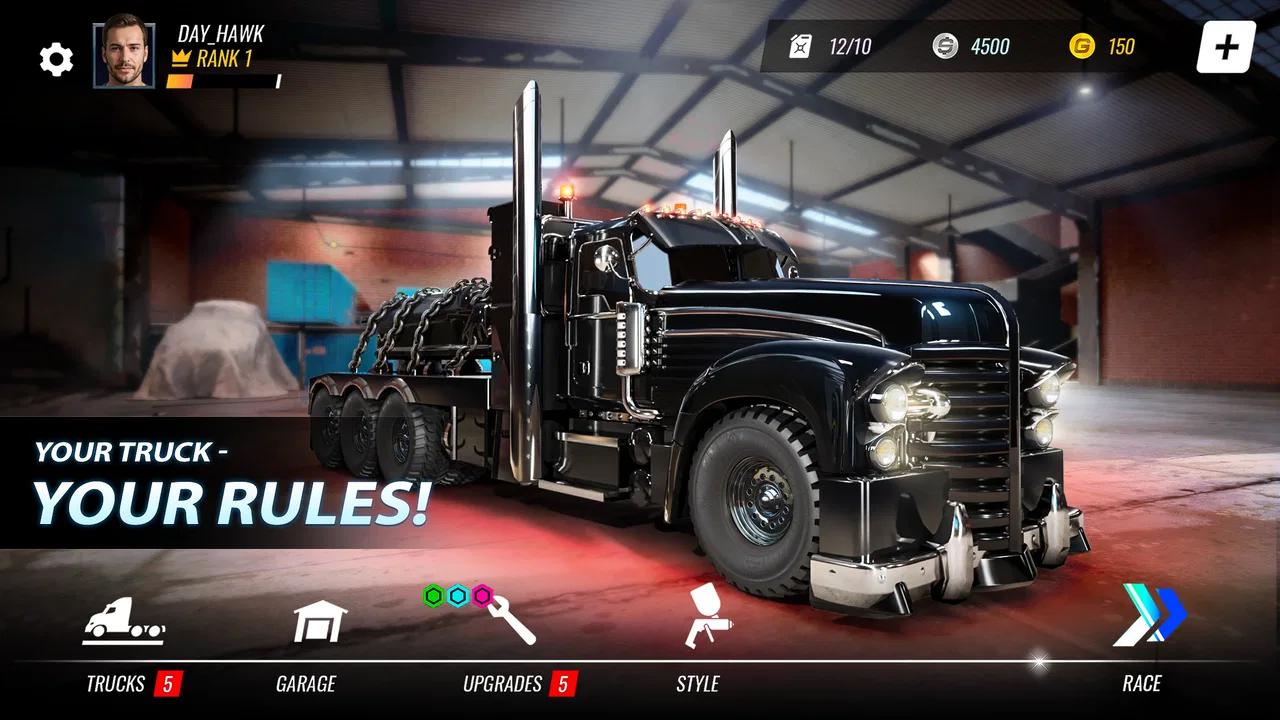
The opening appeal comes from the unusual vehicle choice. A truck has visual weight, and that makes each race feel different from the usual mobile racing game built around sleek cars. The store summary presents it as racing on 18-wheelers with offroad outlaws, and that rougher image is important to the experience. This is not trying to feel like a polished circuit simulator. It has a more rugged, exaggerated personality.
You May Also Like

 Blood Strike: 2.5 Anniversary
Blood Strike’s Loadouts Turn Every Drop Into a Tactical Gamble
A close look at Blood Strike’s custom loadouts: how fast access to signature weapons reshapes its battle royale rhythm, rewards preparation, and narrows the gap between fights.

 Pandora - Music & Podcasts
Pandora’s Music Is Easy to Start, but Harder to Recover
Pandora’s strength is its low-effort path from a seed to a station. Its weak spot is how much confidence it asks you to place in connection, setup, and quiet recovery.

 8 Ball Pool
 Is Built on Rivalries, Rematches, and Routine
A close look at the rivalries, rematches, shared routines, and unanswered safety questions that turn a quick pool match into a persistent mobile community.

 Samsung Music
’s Quiet Strength Is Playing What You Already Own
Its reach comes less from spectacle than from dependable access to a personal library. That simplicity is both the app’s strongest retention engine and its ceiling.

 AccuWeather: Weather Radar
AccuWeather Review: A Quick, Clear Forecast for Everyday Decisions
For everyday plans, the best forecast is the one you can understand quickly. AccuWeather makes rain timing, radar, and local conditions easy to act on, with a few trade-offs.

 Hill Climb Racing
Why Hill Climb Racing Still Turns Crashes Into One More Run
A tiny car, a bumpy hill and one more upgrade: Hill Climb Racing keeps resurfacing because its simple chaos makes every near-miss feel personal.
More From Our News Desk



I found the game particularly approachable when I wanted a racing session that did not require a long commitment. A quick attempt fits naturally into a break, a commute, or the few minutes before doing something else. The drag-racing structure keeps the objective obvious: improve the run, make better decisions, and work toward a stronger truck. There is less mental overhead than in a racing game that asks me to memorize a full track, manage several driving controls, and complete a long event.
That simplicity is not the same as being completely mindless. A good run depends on paying attention to the rhythm of acceleration and reacting at the right moment. Early on, even a small improvement feels meaningful because I can connect it to a visible result: a cleaner launch, a better shift, or a more capable vehicle. This creates a useful learning curve without making the first sessions feel like training exercises.
The game is rated for Everyone 10+, which makes its tone easier to place. It is aimed at a broad audience, but the truck-racing theme gives it more attitude than a purely family-oriented driving game. I would recommend it to someone who likes racing games but does not necessarily want realistic motorsport rules. I would be more cautious with a player who expects a deep driving simulator, because the attraction here is the compact drag-racing loop rather than detailed road behavior.
One practical strength is that the free entry makes trying it straightforward. There is no purchase required to begin, while optional in-app purchases range from $0.49 to $49.99 per item. That range matters when judging the long-term experience. The game is accessible as a free download, but a player who is sensitive to upgrade pressure should pay attention to how often progression encourages spending rather than assuming that the initial price tells the whole story.
What to pay attention to during early races
My best early advice is not to treat every loss as a signal that the truck needs immediate spending. First, repeat the run and identify whether the problem is timing, an underdeveloped vehicle, or simply a poor approach to the event. In a drag-focused game, a small execution mistake can look like a hardware problem. Separating those two causes helps conserve resources and makes the progression feel more deliberate.
I also recommend resisting the urge to upgrade everything as soon as it becomes available. A focused upgrade path is easier to evaluate than scattering resources across improvements that do not solve the current bottleneck. If the truck launches well but loses later, the useful response may differ from a truck that struggles from the start. This kind of diagnosis is one of the first places where the game rewards attention beyond tapping through races.
Another overlooked use case is its suitability for players who like vehicle progression but dislike long races. The game can provide the feeling of building a more competitive machine without asking for a fifteen-minute commitment every time. That makes it a better fit than many traditional racing alternatives for short, repeatable sessions. On the other hand, players who want scenic driving, free exploration, or a wide selection of race formats may find the compact structure restrictive from the beginning.
What gives it value after the novelty fades
The first-week hook is the spectacle of heavy trucks doing a job normally associated with lighter vehicles. The month-to-month question is different: can the upgrade and race cycle keep producing decisions rather than simply repeating the same action? In my experience, the answer is conditional. The game has recurring value for players who enjoy incremental improvement and short competitive attempts, but it is less convincing for anyone who needs constant mechanical variety.
The strongest long-term habit is built around small goals. Instead of opening the game with the vague intention to “play some racing,” I get more from it when I choose a specific target: improve a particular run, prepare a truck for the next challenge, or test whether a change actually helped. That turns a potentially repetitive loop into a series of manageable experiments. Without those goals, the races can start blending together.
This is also where the truck theme continues to help. Even after the initial surprise disappears, the vehicles still give the game a recognisable identity. A standard car racer can offer more variety, but it may also feel interchangeable with many other titles. Big Rig Racing has a clearer personality because the heavy machinery is central to how the game presents itself. That distinction gives it a better chance of remaining memorable, even when the underlying routine becomes familiar.
The game’s broad popularity supports the idea that its formula works for many players: it has an average rating of 4.6 from around 99 thousand ratings, with more than 10 million installs. Those figures are not a guarantee that it will suit every player, but they do suggest that the combination of truck presentation and accessible racing has found a substantial audience. I would interpret that as evidence of a strong core appeal, not proof that the progression will satisfy someone looking for a deep simulation.
Compared with a conventional arcade racer, this game feels more focused and more dependent on preparation. A conventional racer may reward cornering, route knowledge, braking, and improvisation across a full course. Here, the important decisions are compressed into a shorter contest. That makes each attempt easier to fit into daily life, but it also means the game has fewer ways to surprise me once I understand its rhythm.
Compared with a realistic truck simulator, the difference is even greater. A simulator is usually about distance, handling, cargo, road awareness, and the slow satisfaction of completing a journey. This game is about performance in a concentrated race. If I want to relax with a long drive, I would choose the simulator. If I want to make a few attempts and chase a better result, the drag-racing format is more convenient.
A realistic daily routine
Imagine opening the game during a short lunch break. I can complete a few attempts, notice that the truck is losing momentum at a certain point, and spend the rest of the session deciding whether better timing or a targeted improvement is the smarter response. That is a realistic strength: the game does not demand that I reorganize my day around it. It works as a small routine rather than a major time commitment.
For a longer evening session, however, I would set a limit or a clear objective. Repeating similar races without a purpose can make the experience feel like maintenance instead of entertainment. A useful routine is to stop after reaching a planned upgrade goal or after testing a change several times. This keeps the game from turning every spare moment into an invitation to repeat the same action.
The maintenance burden of keeping a truck competitive
Maintenance is not only about the time spent playing. It is also about the attention required to manage progress, decide where resources go, and remember which improvements have actually changed performance. Big Rig Racing is light on controls compared with a full racing simulator, but its progression can still ask for regular involvement. The more seriously I take improvement, the more I need to play with a plan rather than simply collect races.
The current version is 7.20.7.684, and the game runs on Android 8.0 or later. For someone with a compatible phone, that minimum requirement is relatively approachable, but compatibility alone does not remove the broader maintenance question. A game can be easy to install and still demand frequent attention if progress feels dependent on repeated sessions. I would consider it low-friction at the control level and moderate in commitment if I wanted to remain competitive with my own previous results.
The most efficient workflow is to connect each session to one decision. Before spending anything, I would ask what is holding the truck back. Before replaying an event, I would decide what I am testing. Before leaving the game, I would note whether the result improved because of driving or because of an upgrade. This sounds simple, but it prevents the common mobile-game habit of tapping through activities without learning anything from them.
There is also a maintenance burden created by optional purchases. Because individual items can cost as much as $49.99, I would not recommend treating purchases as a casual solution to every difficult race. The free starting point is useful for evaluating the game, and I think players should use that period to decide whether the basic loop is enjoyable on its own. If the game only feels satisfying after spending, its long-term value becomes much harder to defend.
That trade-off is especially important for younger players or anyone sharing a device. The age rating is Everyone 10+, but the presence of in-app purchases still makes it sensible to establish a personal spending rule before playing. My own approach would be to treat purchases as optional convenience rather than part of the normal racing rhythm. If progression begins to feel like a bill for avoiding repetition, I would step away rather than chase the next improvement.
How to reduce unnecessary repetition
One concrete way to keep the routine healthy is to alternate between performance testing and ordinary progression. I would not replay the same event endlessly after a single poor result. Instead, I would make one adjustment, run a small number of tests, and then move on if the change is not producing a clear benefit. This preserves the feeling of experimentation while avoiding a session dominated by frustration.
Another useful habit is to judge improvements by consistency, not by one unusually good attempt. Drag racing can make a single successful run feel decisive, but a change is more valuable when it helps repeatedly. Looking for stable results keeps me from wasting resources on an upgrade or tactic that worked only once. It also creates a more honest sense of progress than chasing a lucky run.
Finally, I would keep the game in rotation with other genres rather than making it my only mobile game. Its short races are excellent for filling small gaps, but the same compact structure that makes it convenient can become tiring when played for hours. Used as a focused racing option, it has a clearer purpose. Used as an all-day game, its limitations become much more visible.
Where fatigue begins
The largest source of fatigue is repetition without a new question to answer. The first attempts ask me to learn the rhythm and understand the truck’s behavior. Later attempts need a reason to exist. If the only goal is to repeat the same race until a number improves, the excitement can flatten, especially for players who prefer exploration or varied tracks.
The heavy-truck theme helps, but it cannot solve every issue. Visual personality is valuable at the start, yet long-term engagement usually needs variety in objectives, meaningful choices, or a strong competitive layer. I would not pretend that the truck presentation alone guarantees lasting interest. For some players, the novelty will be enough to carry the first week but not enough to support a daily habit.
Another possible frustration is the tension between skill and progression. When I lose, I want to know whether I made a mistake or whether my truck simply needs more development. If that distinction feels unclear, the result is less satisfying. The best sessions are the ones where I can identify a practical lesson. The weaker sessions are those where the answer seems to be “repeat or improve the vehicle” without a clear way to choose between them.
The purchase range can add to that fatigue if the game repeatedly presents spending as the easiest escape from a difficult stretch. I am not saying every player will experience that pressure in the same way, but it is a factor worth considering before committing to a long-term routine. A free racing game is most appealing when the free portion already feels complete enough to judge fairly.
I would also skip it if my ideal racing experience involves open roads, realistic truck controls, or deep car customization. The game’s focused drag-racing identity is its strength, but it is also its boundary. A full circuit racer is better for learning lines and mastering corners. A truck simulator is better for journeys and logistics. A broad arcade racer is better for variety. This one is better when I specifically want quick, upgrade-oriented truck contests.
My long-term verdict
After the initial novelty, Big Rig Racing earns lasting space only when I play it as a compact progression game rather than expecting it to become a complete racing world. Its strongest qualities are the distinctive big-rig theme, approachable sessions, and clear connection between better decisions and better runs. Mobirate has chosen a focused idea, and that focus makes the game easy to recommend to someone who wants racing that fits into short breaks.
I would recommend it to players who enjoy tuning a vehicle over time, repeating a challenge to improve, and seeing a large truck handle a speed-focused contest. It is also a sensible choice for someone who wants a free game to test before spending anything. The broad audience, Everyone 10+ rating, and Android 8.0 minimum make it approachable for many users, while the free entry removes the biggest barrier to trying the core experience.
I would not recommend making it a main game for someone who needs constant novelty. If you want full tracks, exploration, realistic driving, or a wide range of racing disciplines, another option will probably hold attention longer. I would also be careful if you dislike upgrade pressure or find repeated short races tiring. The game cannot hide those characteristics for long.
My practical recommendation is to give it a first-week test with a spending limit and a simple rule: only continue if the races themselves are enjoyable before purchases enter the picture. During that test, focus on learning the run, make targeted improvements, and notice whether you still want another attempt after the truck novelty has settled. If the answer remains yes, the game can become a dependable short-session habit.
For me, that is the fairest conclusion. Big Rig Racing is not a universal replacement for every Android or iOS racing game, and its concentrated format will eventually feel narrow to some players. But when I want a quick contest, a memorable truck theme, and a reason to improve one run at a time, it has enough character to justify returning. Its lasting value comes from disciplined short sessions, not endless play.
In the end, I would keep it installed for those moments when I want racing without a long setup or a lengthy event. I would not rely on it for all my driving-game needs, and I would not spend simply to force progression past a repetitive stretch. Used on its own terms, Big Rig Racing is a focused, free-to-start racing game with a clear audience and a satisfying first impression. Whether it stays beyond that first impression depends on how much pleasure you get from refining a heavy machine through repeated, purposeful attempts.
FAQs for Big Rig Racing: Drag racing
01What is Big Rig Racing: Drag Racing?
Big Rig Racing: Drag Racing is a mobile racing game focused on powerful trucks and straight-line competition. Instead of traditional circuit racing, you launch heavy rigs, manage acceleration and shifting, and try to cover the track faster than your opponent. The game also includes truck upgrades, customization options, progression through events, and increasingly challenging rivals as you advance.
02How does the gameplay work in Big Rig Racing?
Races are based mainly on timing and acceleration rather than steering around corners. You need to launch your truck effectively, change gears at the right moment, and use available boosts strategically. Winning races earns rewards that can be spent on improving engine performance, traction, transmission, and other parts. Better timing helps, but upgrading the right components is equally important.
03Can I play Big Rig Racing offline?
Some parts of Big Rig Racing may be accessible without a constant internet connection, but online access is generally recommended for the complete experience. Connectivity can be required for advertisements, cloud-related features, events, updates, purchases, and synchronization. If you plan to play while traveling, it is best to test the game offline first because availability may vary by device and game version.
04Is Big Rig Racing free to download and play?
Big Rig Racing is generally available as a free download, allowing you to start racing without paying an upfront purchase price. However, the game may include optional in-app purchases for currency, upgrades, special items, or faster progression. Advertisements can also appear during play. You can enjoy the core experience without spending money, although progression may require more patience.
05What devices are compatible with Big Rig Racing?
Compatibility depends on the operating system, hardware, and version available through the official app store. A relatively recent Android or iOS device should provide the best experience, especially during races with visual effects and menus running simultaneously. Before downloading, check the current store listing for supported operating-system versions, required storage, and any regional availability restrictions.
Pros
- Easy-to-learn drag races with short
- satisfying sessions.
- Large trucks offer a distinctive alternative to typical racing games.
- Upgrade system gives clear goals beyond simply winning races.
- Offline play is useful when you have no internet connection.
- Simple controls work well for quick play on mobile devices.
Cons
- Energy or fuel limits can interrupt longer play sessions.
- Progress may feel slow without frequent upgrades or rewards.
- Randomized loot can make specific parts difficult to obtain.
- Some races rely heavily on vehicle stats rather than driving skill.
- Ads and in-app purchases may affect the overall free-to-play experience.

Big Rig Racing: Drag racing
Gallery